
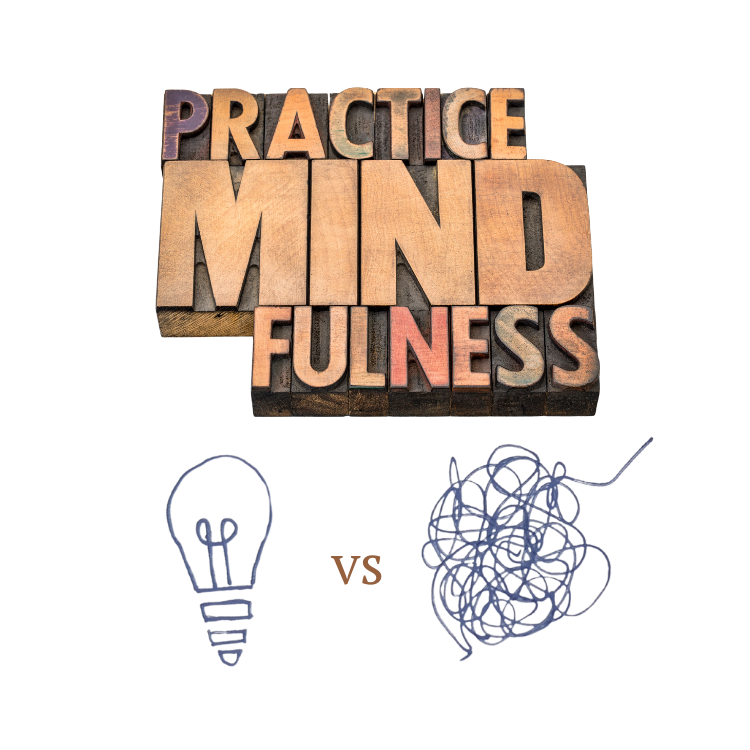
Mindfulness and Focus Training to Enhance Cognitive Behavioral Therapy for DSPs
Introduction
Direct Support Professionals (DSPs) work in highly dynamic, often emotionally charged environments, supporting individuals with developmental disabilities, mental health needs, and diverse communication styles. This work demands patience, focus, emotional balance, and the ability to respond thoughtfully in the moment.
Cognitive Behavioral Therapy (CBT) principles can be an effective tool for supporting individuals in identifying unhelpful thoughts, developing new perspectives, and adopting healthier coping skills. But to apply CBT concepts successfully—whether directly or in support of a treatment plan—DSPs need mindfulness: the practice of intentionally paying attention to the present moment without judgment.
Mindfulness strengthens attention, improves emotional regulation, and helps DSPs respond to individuals with clarity and compassion. When paired with CBT strategies, mindfulness can improve both the DSP’s effectiveness and the individual’s progress.
The Connection Between Mindfulness and CBT in DSP Work
CBT focuses on changing unhelpful thought patterns and behaviors. Mindfulness makes that process more effective by:
- Increasing awareness of thoughts, feelings, and behaviors—both in DSPs and the individuals they support.
- Reducing reactivity in high-stress moments, allowing for calmer, more supportive responses.
- Promoting present-moment focus, making interactions more intentional and person-centered.
In practice, DSPs can use mindfulness to:
- Stay grounded when individuals are in crisis.
- Guide individuals in noticing and naming their emotions.
- Support behavior change plans with tools that improve attention and self-awareness.
Benefits for DSPs and Individuals
- Improved Focus – DSPs can give their full attention to the person in front of them, reducing errors and improving rapport.
- Reduced Burnout – Mindfulness lowers stress, protecting DSPs from compassion fatigue.
- Better Emotional Regulation – Remaining steady allows DSPs to model healthy coping skills.
- Early Detection of Changes – Heightened awareness helps DSPs notice subtle mood, health, or behavioral changes sooner.
- Stronger CBT Outcomes – Individuals can better practice identifying and reframing thoughts when they are calm and focused.
Seven Mindfulness Attitudes to Strengthen CBT Support
These foundational attitudes of mindfulness (adapted from Jon Kabat-Zinn) can be practiced by DSPs and taught to individuals to enhance CBT strategies.
1. Non-Judging
- Meaning: Observing thoughts, emotions, and behaviors without labeling them as “good” or “bad.”
- DSP Practice: Notice your own reactions without criticism; notice the individual’s behaviors without rushing to evaluate.
- Teaching Tip: Guide individuals to treat their thoughts like passing clouds—observed, not fought.
2. Beginner’s Mind
- Meaning: Seeing each moment with curiosity, as though it’s new.
- DSP Practice: Approach each shift, interaction, or behavior plan fresh—even if you’ve seen similar situations before.
- Teaching Tip: Encourage individuals to explore new coping skills as experiments, without assuming they won’t work.
3. Patience
- Meaning: Allowing change to happen at its own pace.
- DSP Practice: Recognize that skill-building and behavioral change take time; avoid rushing the process.
- Teaching Tip: Celebrate small wins, such as a calmer response to a trigger or one successful use of a coping skill.
4. Acceptance
- Meaning: Acknowledging reality without denial or avoidance.
- DSP Practice: If an individual is upset, accept their feelings before moving into problem-solving.
- Teaching Tip: Help individuals name and accept emotions (“I feel angry right now”) as the first step in CBT exercises.
5. Trust
- Meaning: Believing in your own ability—and the individual’s ability—to navigate challenges.
- DSP Practice: Trust your training and instincts in the moment.
- Teaching Tip: Reinforce the individual’s progress and capacity to learn new coping skills.
6. Non-Striving
- Meaning: Focusing on the process, not forcing a specific outcome.
- DSP Practice: Engage fully in the moment without measuring immediate “success.”
- Teaching Tip: Emphasize practicing CBT skills without expecting instant changes.
7. Letting Go
- Meaning: Releasing attachment to unhelpful thoughts or outcomes.
- DSP Practice: Let go of frustration from a difficult day or a challenging interaction.
- Teaching Tip: Teach imagery, like placing a troubling thought on a leaf and watching it float away.
Practical Focus-Building Exercises for DSPs
These short, repeatable exercises can be used before shifts, during breaks, or in support sessions.
- Mindful Breathing – Take 1–2 minutes to focus on your breath, feeling each inhale and exhale.
- Body Scan – Slowly notice sensations from head to toe, relaxing tense areas.
- Single-Task Attention – Choose one small task and give it complete focus (e.g., making tea, writing a note).
- Noting Practice – When distracted, mentally note “thinking” or “feeling” and gently return to the task.
- Guided Mindfulness – Use short audio or app-based meditations for structure.
Integrating Mindfulness into DSP + CBT Support
- Start Sessions Grounded – Begin with 1–2 minutes of breathing or sensory awareness.
- Use in the Moment – If an individual becomes dysregulated, pause for a brief grounding exercise before continuing.
- Assign Home Practice – Encourage individuals to practice mindfulness at home alongside CBT worksheets.
- Model the Skill – Practice mindfulness yourself so individuals see it in action.
Conclusion
For DSPs, mindfulness is not just a self-care tool—it’s a professional skill that strengthens focus, emotional regulation, and the ability to support CBT strategies effectively. By practicing the seven attitudes of mindfulness and integrating focus-building exercises, DSPs can create more stable, compassionate, and effective support environments.
When DSPs are calm, present, and focused, they not only enhance their well-being but also empower the individuals they support to take meaningful steps toward their personal goals.
Download the Five Facet Mindfulness Questionnaire (FFMQ)